

In today’s digital landscape, voice search is revolutionizing the way consumers find information online. With the rise of smart speakers, virtual assistants, and mobile voice commands, businesses must adapt to these changes to remain competitive. Voice search optimization (VSO) is no longer a luxury but a necessity for small businesses aiming to enhance their online presence and connect with customers more effectively.
Understanding Voice Search Optimization
Voice Search Optimization refers to the process of optimizing your website to rank higher in search engine results generated by voice queries. Unlike traditional text searches, voice searches are more conversational and often longer in length. This shift necessitates a different approach to SEO strategies.
Why Voice Search Matters
- Increased Usage: With the proliferation of devices like smartphones and smart speakers, more people are using voice search daily.
- Enhanced User Experience: Voice search offers a hands-free and faster way to find information, improving user satisfaction.
- Local Searches: A significant portion of voice searches are local, making it crucial for small businesses to capture this audience.
Strategies for Voice Search Optimization
1. Focus on Conversational Keywords
Unlike typed searches, voice queries are more natural and conversational. Incorporate long-tail keywords and phrases that mimic the way people speak. For example, instead of targeting “best plumber Boise,” consider “Who is the best plumber in Boise?” This alignment with natural speech patterns can improve your chances of appearing in voice search results.
2. Optimize for Featured Snippets
Featured snippets, or position zero, are prime real estate for voice search. Structuring your content to answer common questions clearly and concisely increases the likelihood of being selected as a featured snippet. Use bullet points, numbered lists, and direct answers to improve your chances.
3. Improve Local SEO
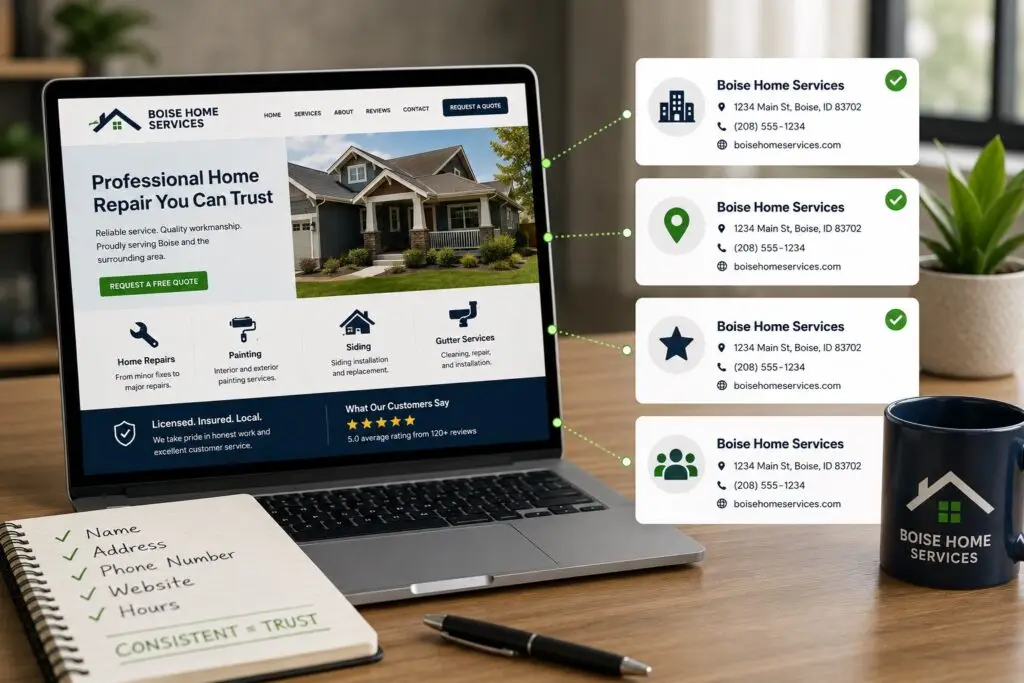
Since many voice searches are localized, ensuring your business is optimized for local SEO is critical. This includes claiming your Google My Business listing, maintaining accurate NAP (Name, Address, Phone Number) information, and encouraging customer reviews.
4. Enhance Website Speed and Mobile-Friendliness
Voice searches often occur on mobile devices, making a fast-loading, mobile-friendly website essential. Google prioritizes mobile-first indexing, so ensuring your site performs well on mobile devices can positively impact your voice search rankings.
5. Use Structured Data Markup
Implementing structured data markup helps search engines understand your content better. By using schema.org vocabulary, you can provide context to your content, improving the chances of being featured in voice search results.
Adapting Content for Voice Search
Creating content that aligns with how people speak is crucial for voice search optimization. Here are some tips to adapt your content:
- Answer Questions: Identify common questions your customers might ask and provide clear, concise answers.
- Use Natural Language: Write in a conversational tone that mirrors everyday speech.
- Optimize for Local Queries: Include local landmarks, neighborhoods, and other specific details relevant to your area.
- Keep Content Clear and Simple: Avoid complex jargon and ensure your content is easily understandable.
The Future of Voice Search
Voice search technology continues to evolve, with advancements in artificial intelligence and machine learning enhancing its capabilities. As this technology becomes more integrated into daily life, businesses must stay proactive in optimizing for voice search to maintain visibility and competitiveness.
Emerging Trends
- Multimodal Search: Combining voice with visual elements will provide a richer search experience.
- Voice Commerce: As voice-enabled shopping grows, optimizing for transactions via voice will become essential.
- Personalization: Personalized voice search results tailored to individual preferences and behaviors will gain prominence.
Measuring the Impact of Voice Search Optimization
To assess the effectiveness of your VSO efforts, consider the following metrics:
- Voice Search Traffic: Monitor the increase in organic traffic from voice searches using tools like Google Analytics.
- Featured Snippet Appearances: Track how often your content appears as featured snippets.
- Local Search Rankings: Evaluate changes in your local search rankings to gauge the impact on nearby customers.
- Conversion Rates: Analyze how voice search traffic translates into leads and sales.
Implementing VSO with Boise WEB
At Boise WEB, we specialize in helping small businesses navigate the complexities of voice search optimization. Our team of experts understands the nuances of VSO and is dedicated to crafting strategies that align with your business goals. From optimizing your content to enhancing local SEO, we provide comprehensive solutions to prepare your website for the future of search.
Conclusion
Voice search is reshaping the digital landscape, offering new opportunities for businesses to connect with customers. By implementing effective voice search optimization strategies, you can enhance your online presence and stay ahead of the competition. Partner with Boise WEB to ensure your website is prepared for the future of search.
Contact Boise WEB to optimize your site for voice search today!