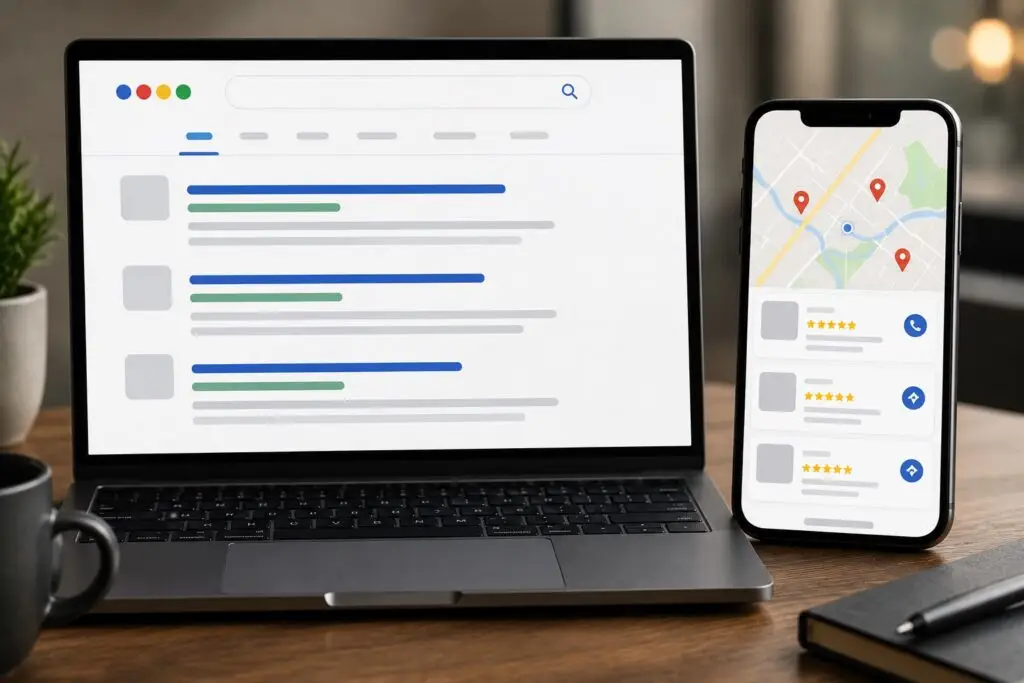
When a potential customer searches for a service, search engines can return two general types of placements: organic search results and the local map pack (also called the local map rankings or local pack). Organic SEO refers to the traditional blue-link results on the search engine results page (SERP). Local map rankings are the map-based results, typically showing three prominent local businesses with contact info, reviews, and directions.
How they work: core ranking signals
Organic SEO ranking factors are broadly focused on relevance, authority, and user experience. Key factors include:
- On-page content and keyword relevance
- Technical SEO: site speed, mobile friendliness, structured data
- Backlinks and domain authority
- User engagement signals like click-through rate and time on site
Local map rankings rely on signals tailored to local intent. The three main local ranking factors are:
- Proximity: How close the searcher is to your business location
- Prominence: How well-known or authoritative your business appears (reviews, links, mentions)
- Relevance: How well your business listing matches the search query and categories
Key differences explained
Proximity matters much more in the local map pack than in organic rankings. A highly optimized website may outrank a local competitor in organic search but still lose the map pack placement to a closer business with better Google Business Profile optimization and more reviews.
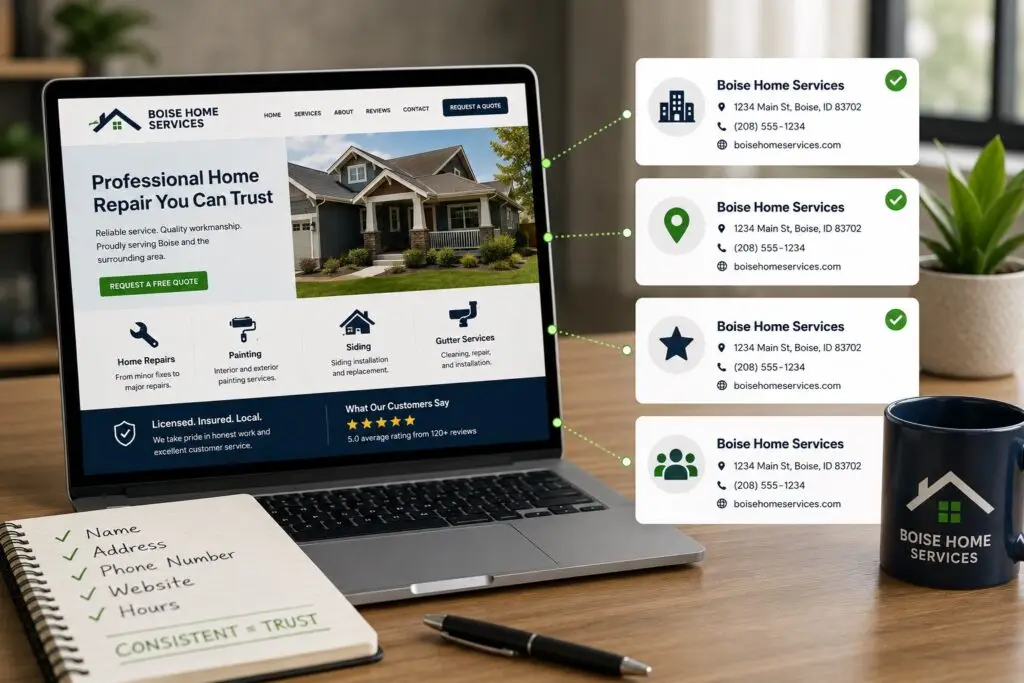
Backlinks drive organic authority but have a weaker direct effect on map pack placement. Conversely, local citations—consistent Name, Address, Phone (NAP) listings across directories—help map visibility more than general backlinks.
Practical optimization tips
Small businesses should treat organic SEO and local map ranking work as complementary strategies:
For organic SEO
- Create service pages and blog content that match customer search intent and include local modifiers when relevant (for example, “boise plumber” or “residential electrician near me”).
- Optimize title tags, meta descriptions, and header structure for primary keywords and related LSI terms.
- Improve technical performance: mobile-first design, fast page speed, and secure HTTPS.
- Build quality backlinks from local organizations, suppliers, and industry partners.
For local map rankings
- Claim and fully optimize your Google Business Profile: accurate business hours, categories, services, and high-quality photos.
- Maintain NAP consistency across directories and local citations (Yelp, Yellow Pages, industry directories).
- Encourage and respond to customer reviews; review velocity and sentiment affect local prominence.
- Use local schema markup and include location pages on your site for each service area.
Measurement and tracking
Measure organic performance with Google Search Console and Google Analytics: track impressions, clicks, and which keywords bring visitors. For local map rankings, use Google Business Profile Insights to monitor searches, direction requests, and phone calls. Local rank-tracking tools can show where you appear in the map pack for target keywords and neighborhoods.
Common misconceptions
- “If my site ranks organically, I will automatically win the map pack.” Not always. Map pack placement depends on local signals and proximity.
- “More citations equal top placement.” Quality and consistency matter more than raw citation volume.
- “Reviews only help reputation.” Reviews also influence local ranking and click-through performance in the map pack.
Action checklist for small businesses
- Claim and complete your Google Business Profile with accurate info and photos.
- Create or optimize location-specific pages on your website with clear service descriptions and local keywords.
- Audit citations for NAP consistency and correct errors.
- Ask customers for reviews and respond professionally to feedback.
- Improve site speed and mobile UX to support organic rankings.
- Build local backlinks from community pages, suppliers, and local partnerships.
Why both matter
Many customers use the map pack when they want immediate, local service—they click for directions or call. Organic search helps you capture broader queries, competitive informational searches, and customers who research before purchasing. Combining organic content strategy with local map optimization maximizes visibility across the full buyer journey.
At Boise WEB, we help trades and home service businesses balance both approaches so you show up when customers are searching near you and when they research services. Whether you need local citation cleanup, Google Business Profile management, or a site optimized for organic keywords, an integrated plan delivers the best ROI for small businesses that rely on local customers.
Conclusion
Organic SEO and local map rankings are distinct but complementary. Organic SEO builds long-term website authority and traffic, while local map optimization captures high-intent local customers and drives calls and visits. Small businesses should invest in both: strong website content and technical SEO paired with a fully optimized Google Business Profile, consistent citations, and active review management.
Need help improving both your organic search presence and local map rankings? Boise WEB specializes in website design and local SEO for small businesses. Contact us to schedule a free consultation and a customized plan to get more local customers.