

Why website content matters for Google Maps
Google evaluates three core factors for local ranking: relevance, distance, and prominence. Website content primarily influences relevance and prominence. Relevance tells Google whether your business matches a searcher’s intent—your pages should clearly describe services, service areas, and specialty offerings. Prominence comes from the overall online presence, including backlinks, citations, reviews, and content that drives user engagement and trust.
Key content elements that help local rankings
- Service area and location pages: Create dedicated pages for the cities and neighborhoods you serve. Include specific services offered in each area and natural, localized phrases (e.g., “water heater repair in Boise”). Avoid duplicating content across pages; each page should have unique, helpful details.
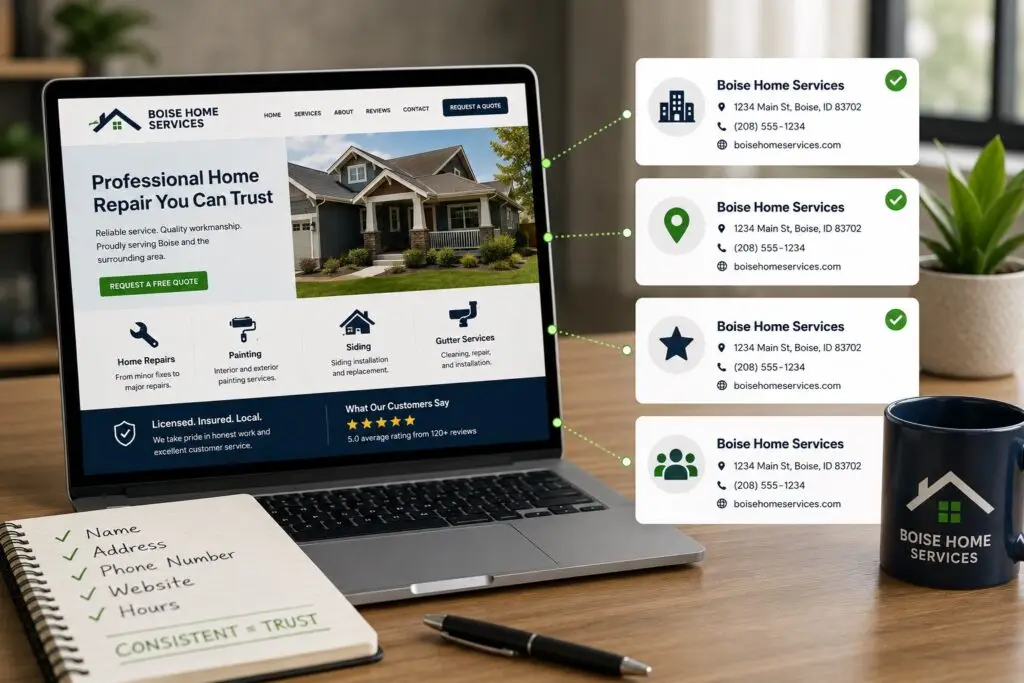
- Consistent NAP: NAP stands for Name, Address, Phone. Ensure the exact same NAP on your website and across citations and directories. Inconsistent NAP confuses Google and weakens local signals.
- Google Business Profile alignment: Your website should mirror your GBP categories, services, hours, and keywords. Link the GBP to an appropriate landing page, not just your homepage, to improve relevance for specific queries.
- Structured data (Schema): Implement schema where applicable. Schema helps search engines understand your business type, service area, and customer feedback, boosting eligibility for rich results and local features.
- Content that answers local intent: Use pages and FAQs to answer questions local customers ask: pricing estimates, service areas, appointment process, licensing, and guarantees. Pages that solve searcher intent earn clicks, longer sessions, and better behavioral signals.
- Reviews and reputation content: Showcase recent Google and third-party reviews on your site and respond publicly through GBP. Positive reviews increase trust, and review content often contains natural local keywords that reinforce relevance.
- Local media and citations: Publish case studies, project galleries, and local blog posts. Local press, community sponsorship pages, and directory citations create backlinks and local context that support prominence.
On-page SEO tactics that influence Maps rankings
Small adjustments to content and structure can yield noticeable improvements in local visibility:
- Use geo-modified keyword phrases naturally in headings, page copy, and meta tags (e.g., “garage door installation Boise”).
- Add a visible, crawlable NAP block in the footer and a Contact page with an embedded Google Map.
- Optimize images with descriptive filenames and alt text that include local terms when relevant (e.g., “meridian-plumbing-repair.jpg”).
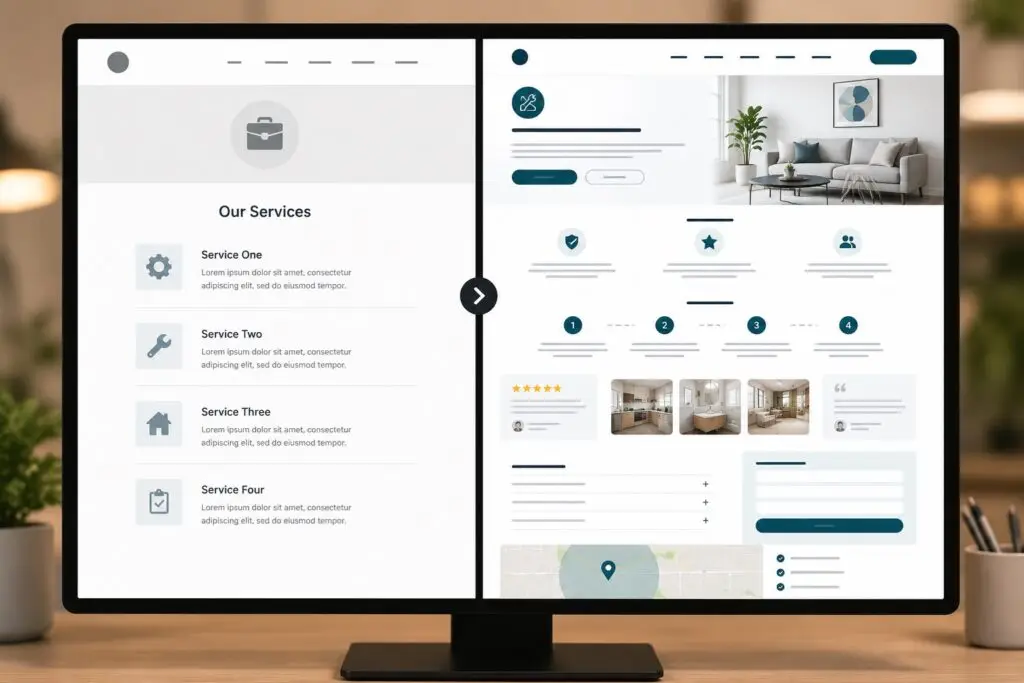
- Create a clear services architecture with internal links: service pages link to location pages and vice versa to distribute relevance.
- Include structured FAQs and consider FAQPage schema to increase chances of appearing in search snippets and Maps-related queries.
- Keep content concise, helpful, and mobile-friendly—most local searches happen on mobile devices.
Content that builds prominence and trust
Prominence is a reputation measure. Content that enhances prominence includes:
- Project photos and before/after galleries with captions and local context.
- Customer stories and case studies that include neighborhoods or cities served.
- Repeatable, local blog posts on seasonal topics, maintenance tips, or regulation updates that show expertise.
- Clear calls to action and easy contact options (click-to-call, request a quote forms) that increase conversions and user engagement.
Common pitfalls to avoid
- Thin or duplicate location pages that offer no unique value.
- Stuffing city names unnaturally into content—this looks spammy and can hurt UX.
- Broken or inconsistent contact details across website and listings.
- Ignoring mobile performance—slow pages reduce clicks and increase bounce rates, which can weaken local signals.
How to prioritize improvements
- Audit your GBP and website NAP for consistency.
- Create or improve service area and location pages with unique, helpful content.
- Implement LocalBusiness schema and FAQ schema where useful.
- Encourage and display reviews, and respond to them professionally.
- Build local citations and acquire local backlinks via partnerships and community engagement.
These steps align website content with the signals Google uses to rank businesses in Maps. For trades and home services businesses, targeted content that reflects real-world offerings and service areas often yields quick gains in local visibility.
Conclusion
Website content is a foundational pillar of Google Maps performance. By improving relevance with localized pages, reinforcing prominence through reviews and local content, and using schema and consistent NAP data, small businesses can improve their chances of appearing in the Local Pack and attracting more calls and leads.
Boise WEB helps trades and home-service businesses create local websites and content that boost Google Maps rankings. If you want a local SEO audit, service-area page plan, or help implementing schema and reviews, contact Boise WEB today and let us help you get found where it matters most.