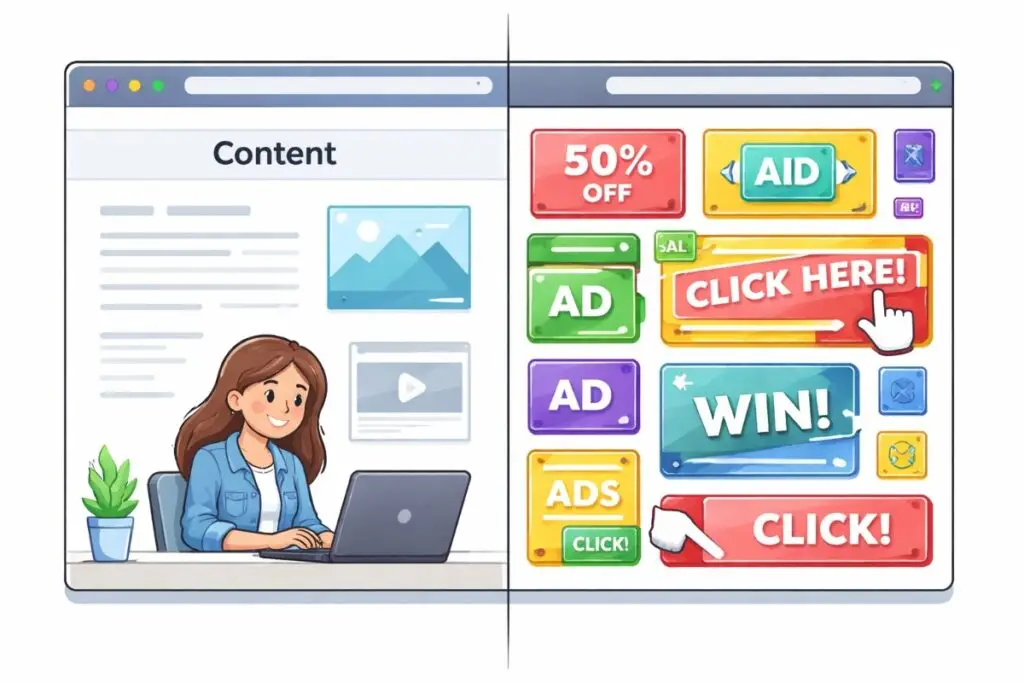
Small business owners often face the question: should I spend my marketing budget on content or on ads? The short answer is: use both, but lean toward content for long-term growth. Below we unpack why content marketing and paid advertising work differently, how to measure return on investment, and how to build a practical strategy that fits the needs of trades and home-service companies.
What content marketing does for your business
Content marketing includes blog posts, service pages, local SEO pages, how-to videos, and evergreen resources. Over time, quality content helps your website rank in search engines for relevant queries—what marketers call organic traffic. For local businesses, content that targets neighborhood keywords, FAQs, and service-specific problems builds authority and drives consistent inbound leads.
Benefits of content marketing:
- Lower long-term customer acquisition cost (CAC) as organic visibility grows.
- Improved trust and brand recognition through helpful, consistent information.
- Evergreen value: one well-optimized article can generate leads for months or years.
- Stronger local SEO and better Google Maps performance when paired with citations and reviews.
What paid advertising does for your business
Paid ads—search ads, social media ads, and display campaigns—are designed for speed. If you need leads this month, ads put your business at the top of search results or in front of targeted users. Ads are highly measurable and flexible: you can test headlines, offers, and landing pages quickly.
Benefits of paid ads:
- Immediate visibility and fast lead generation.
- Targeted reach by location, demographics, or user intent.
- Useful for promotions, seasonal demand, and testing new services.
Key tradeoffs: time, cost, and sustainability
Content requires an upfront investment of time and resources: research, writing, optimization, and periodic updates. The payoff is stable organic traffic and compounding returns. Ads require ongoing spend; when you pause campaigns, that traffic stops. For long-term business growth—especially for local services where repeat business and word-of-mouth matter—content and local SEO create a foundation that reduces dependency on paid spend.
How to measure success
Use different metrics for each channel. For content, track organic traffic, keyword rankings, contact form submissions, phone calls from landing pages, and engagement metrics like time on page. Also track lifetime value (LTV) and CAC over months to see how content lowers your costs.
For ads, measure cost per lead (CPL), conversion rate, return on ad spend (ROAS), and immediate revenue driven by campaigns. A short-term ad may show a high CPL but also bring high-value customers quickly—this can justify the spend when cash flow or immediate demand requires it.
A practical strategy for small trades and home-service businesses
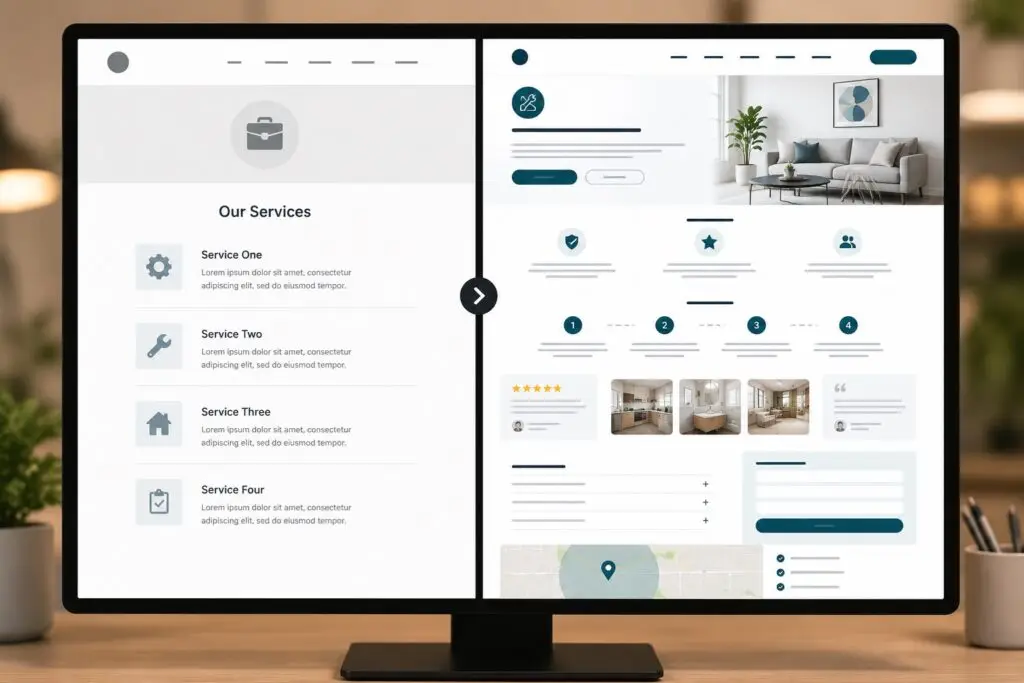
1. Start with a content-first foundation. Build service pages and local landing pages for each service and neighborhood you serve. Create 6 to 12 focused blog posts or FAQs that answer common customer questions (pricing, process, service area, licensing). Optimize each page for relevant keywords and local search terms.
2. Run targeted ads to fill gaps and test offers. Use search ads for highly commercial keywords like “emergency plumber near me” or “roof repair Boise.” Use ads seasonally—promote snow removal in winter or AC tune-ups in spring. Link ads to optimized landing pages that match the ad message to increase conversion rates.
3. Connect content and ads. Use high-performing blog posts as landing pages for informational ad campaigns, or promote your best content with social ads to build brand awareness. Repurpose content into short clips, before-and-after photos, and customer testimonials that feed both organic and paid channels.
4. Track and iterate. Keep a simple tracking dashboard with monthly organic traffic, leads by channel, CPL, and CAC. Small businesses benefit from quick cycles: test an ad, measure lead quality, and refine content to address objections or better match search intent.
Local SEO and reputation matter
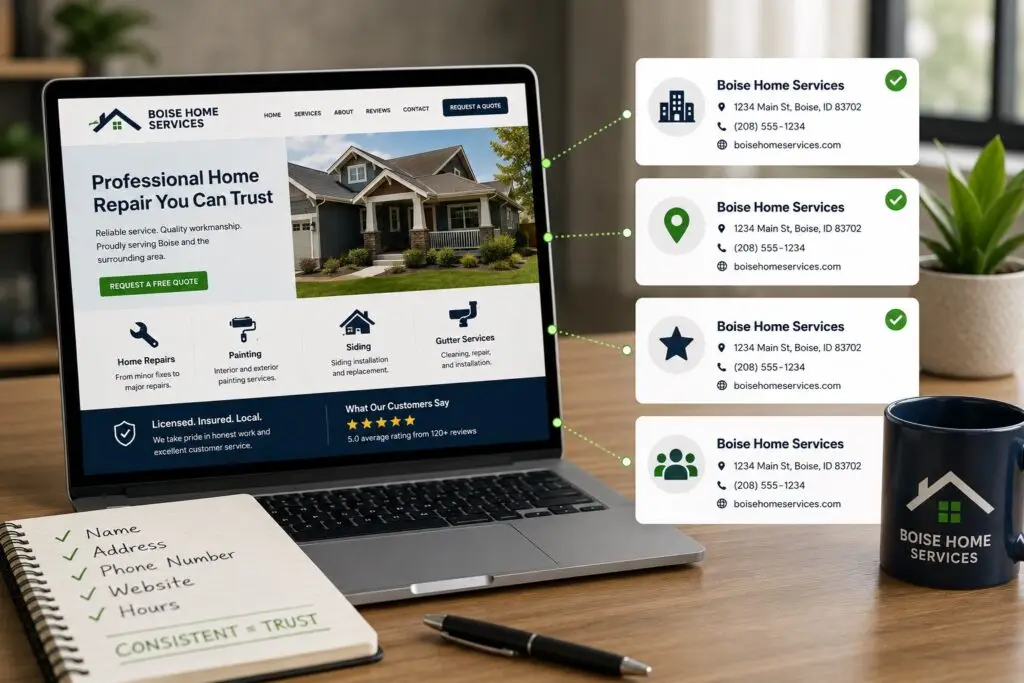
For Boise-area service businesses, appearing in Google Maps and local searches is critical. Claim and optimize your Google Business Profile, collect reviews, and ensure your NAP (name, address, phone) is consistent across directories. Local content—service area pages, job-type descriptions, and project galleries—helps you rank for neighborhood searches that often convert at higher rates.
When to prioritize ads
If you need immediate leads, seasonal calls, or are testing a new service, ads are appropriate. Ads are also valuable when launching a new website or rebranding to maintain visibility while content has not yet matured.
When to invest more in content
If your business seeks sustainable growth, lower long-term marketing costs, and stronger brand authority, prioritize content and SEO. Trades and home-service businesses often win with helpful, locally focused content that answers customer questions and demonstrates expertise.
Conclusion
Content and ads are complementary tools. For long-term growth, a content-first approach supported by local SEO builds a sustainable pipeline of organic leads. Use paid ads strategically to accelerate results, test offers, and fill demand gaps. Small, service-based businesses get the best return when they balance both tactics and measure performance over time.
Need help deciding the right mix for your business? Boise WEB helps small trades and home-service companies build content strategies, local SEO, and targeted ad campaigns that work together. Contact Boise WEB for a free consultation and a practical plan to grow your online leads.