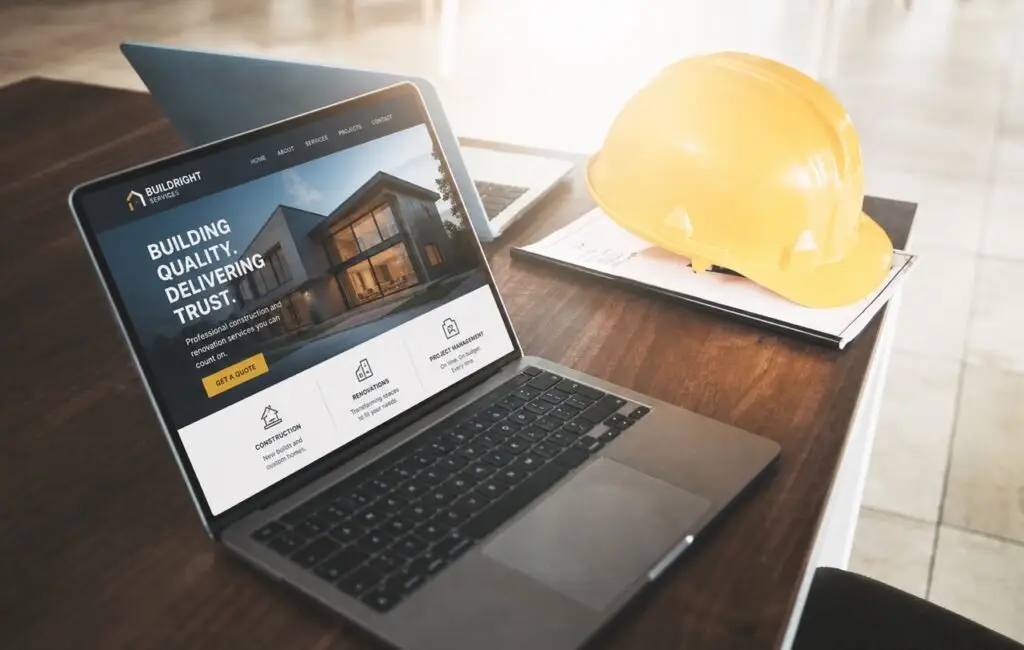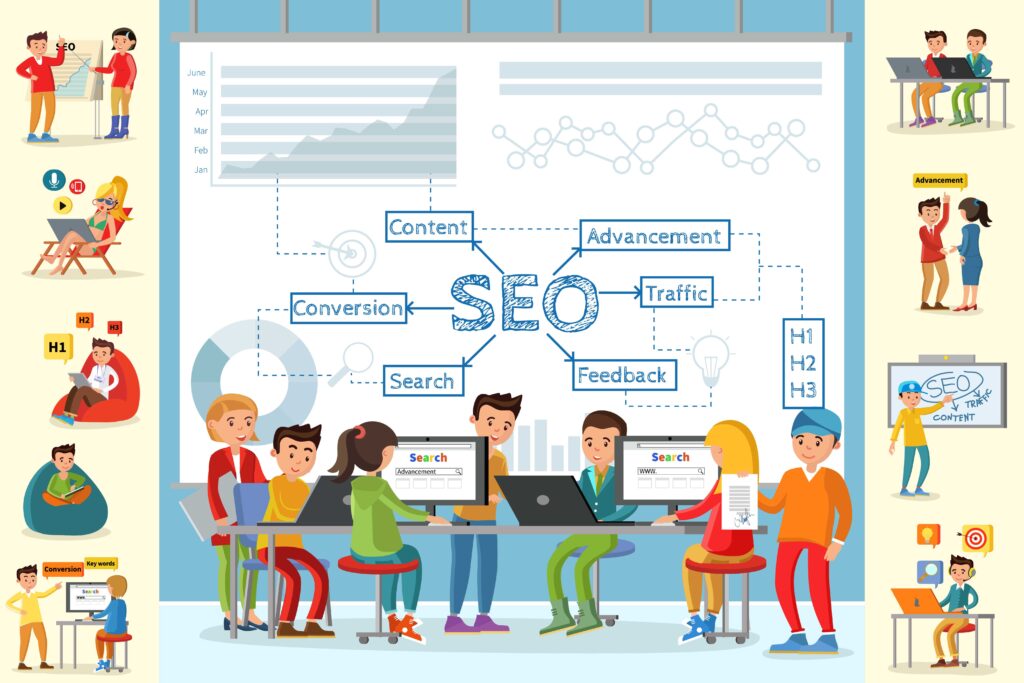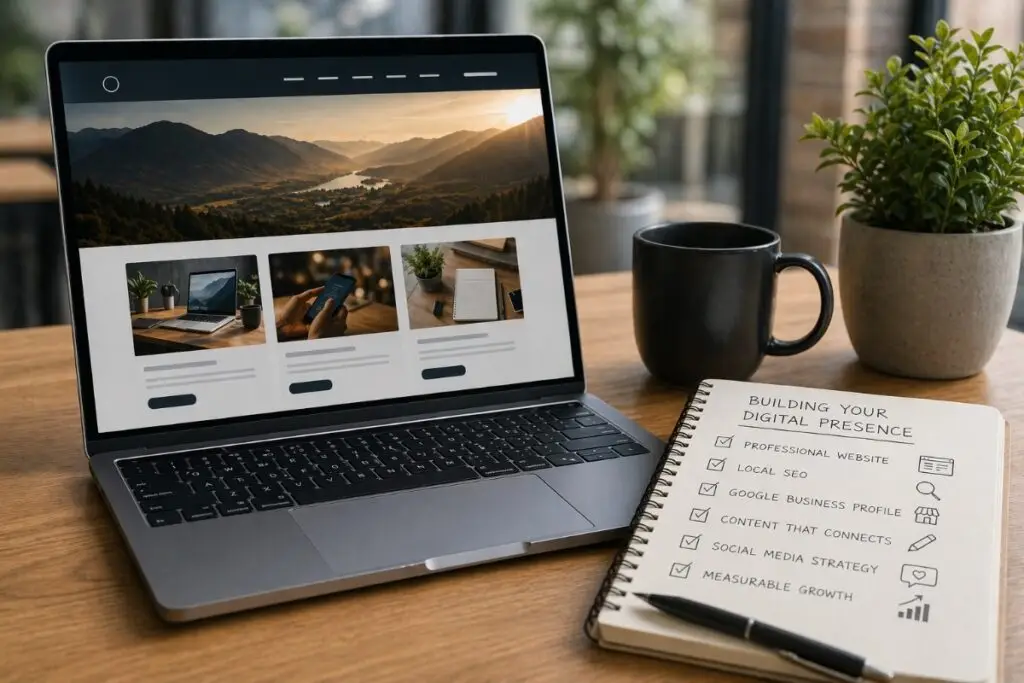
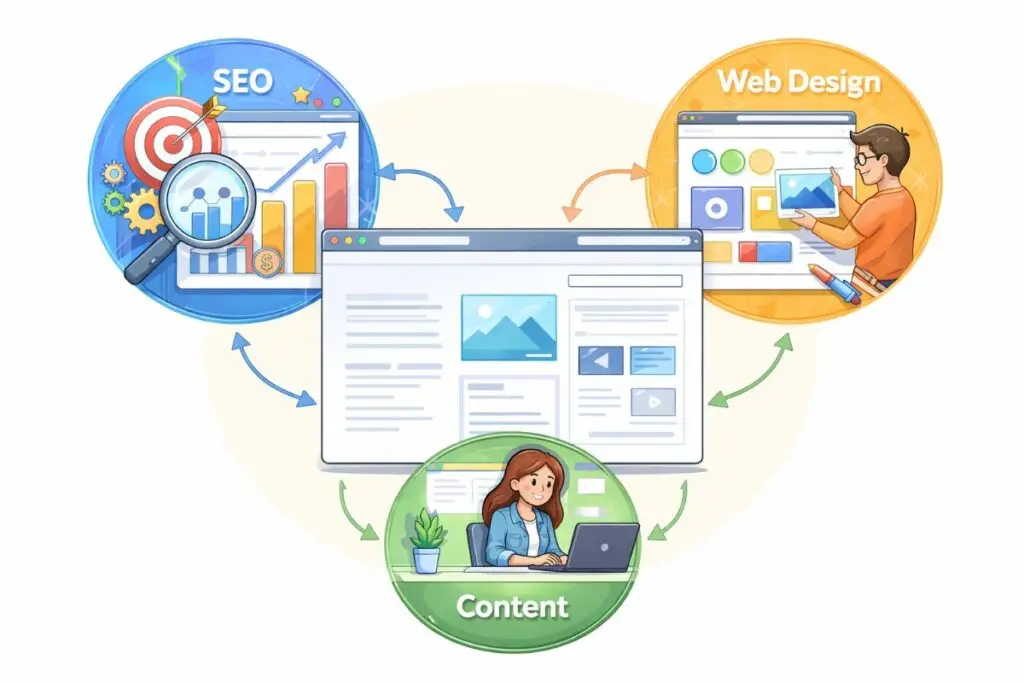
Think of your website as a salesperson on the clock 24/7. SEO brings the right prospects to the door, web design makes the visit easy and trustworthy, and content answers questions and nudges visitors to take the next step. Each discipline supports the others: without the right content, good SEO has nothing to rank; without a usable site, traffic won’t convert; without SEO, even a great site sits unseen.
SEO: Make Your Business Findable
Search engine optimization includes on-page and technical work plus local signals that help your site appear for relevant searches. Key elements for small contractors and service providers include:
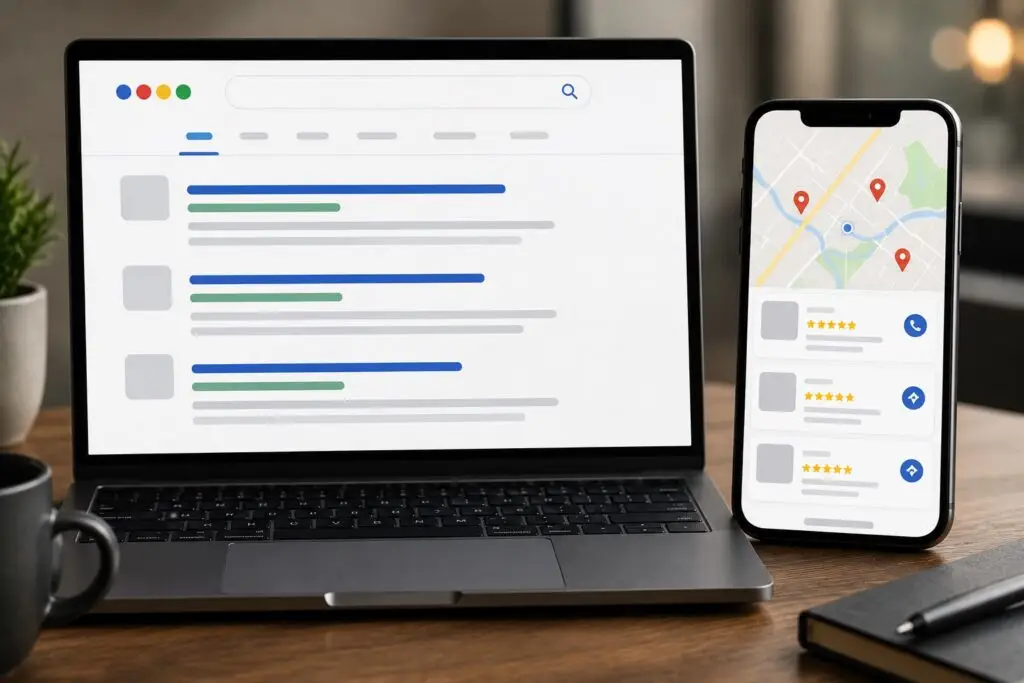
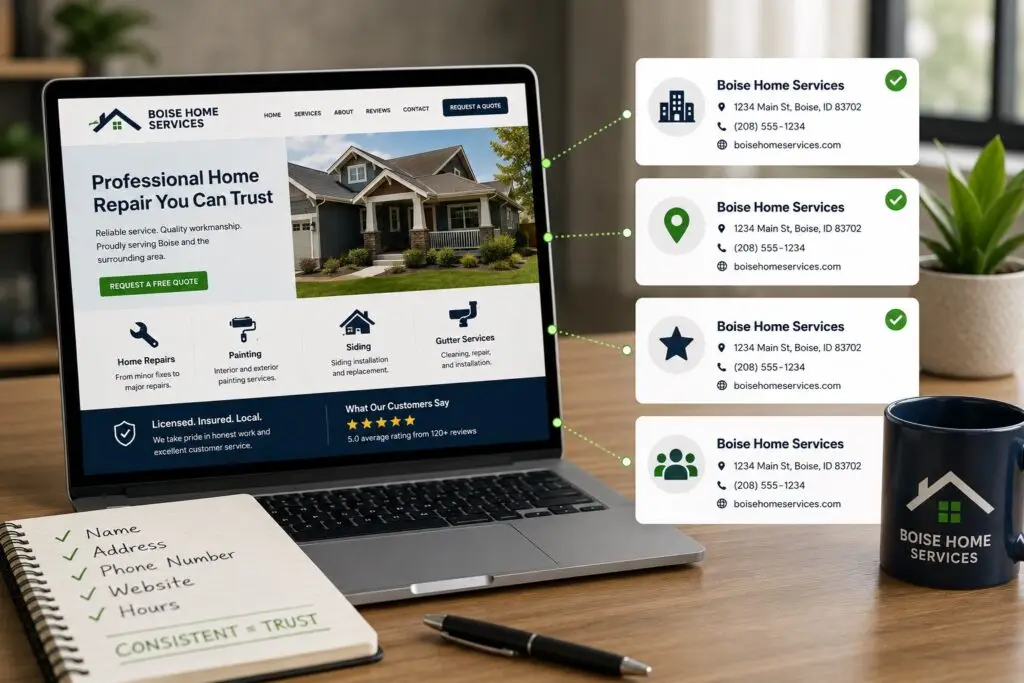
- Local SEO and Google Business Profile: accurate business name, address, phone, and service areas; consistent citations across directories; optimized Google Business Profile to capture map-pack traffic.
- On-page SEO: clear title tags, meta descriptions, header structure (H1, H2), and descriptive URLs for service pages (example: /boise-plumbing-repairs).
- Technical SEO: mobile-first performance, fast page speed, secure HTTPS, and crawlable site structure so search engines index your pages reliably.
- Backlinks and local citations: quality references from local partners, suppliers, or industry sites help search rankings over time.
Definitions: “Citations” are online mentions of your business name, address, and phone number. “Schema” or structured data is code that helps search engines display useful info like service types, hours, and reviews.
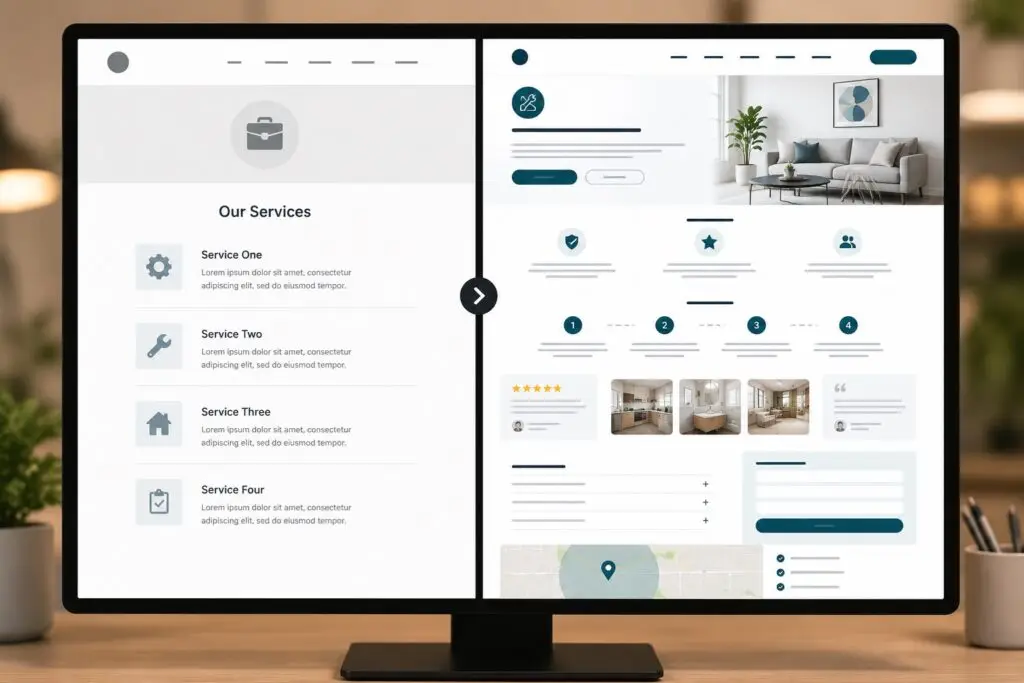
Web Design: Create Trust and Make Actions Easy
Design matters more than ever for conversion. For busy small-business owners, practical, professional design beats trendy visuals. Focus on:
- Mobile-first layout: most local searches happen on phones. Buttons, click-to-call, and easy navigation reduce friction.
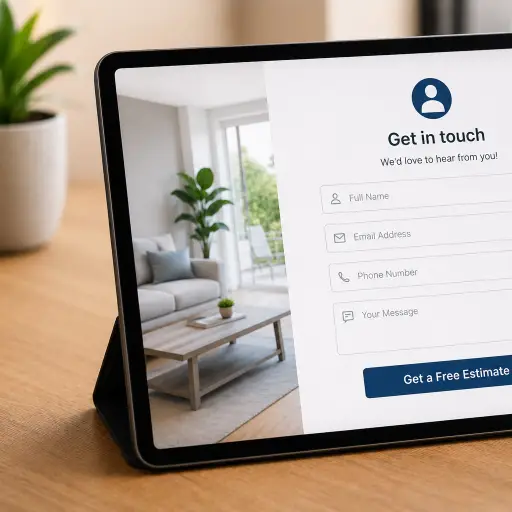
- Clear calls-to-action (CTAs): visible phone number, request estimate form, and service-specific landing pages that guide visitors to contact you.
- Speed and accessibility: fast-loading pages and readable content increase engagement and improve search rankings.
- Trust signals: customer reviews, badges, examples of past work, and a clear value proposition that explains why a visitor should hire you.
Content: Answer Questions and Build Authority
Content does the heavy lifting for both SEO and conversion. Service pages, FAQs, and blog posts each serve a purpose:
- Service pages: target specific keywords (for example, “boise water heater repair”) and explain the process, pricing cues, and next steps.
- Localized content: reference neighborhoods, landmarks, and common local problems to match intent in local search queries.
- Blog and resources: create helpful articles that address common questions, troubleshooting tips, or seasonal topics to attract organic traffic and establish expertise.
- Internal linking: connect blog posts to relevant service pages to pass authority and guide users to conversion points.
Conversion Rate Optimization: Turn Visits into Leads
Traffic is valuable only if it turns into calls, form submissions, or booked appointments. Combine CRO tactics with analytics:
- Use focused landing pages for ads and seasonal promotions to keep messaging consistent and improve conversion rates.
- Test CTA language, button placement, and form length. Even small changes can multiply leads.
- Track goals with Google Analytics and Search Console, and follow conversion funnels to see where visitors drop off.
Practical Steps for Small Trades and Home-Service Businesses
- Audit your Google Business Profile and NAP consistency across major directories.
- Prioritize service pages for your top 3 revenue-driving services and make each page a clear conversion path (problem, solution, trust proof, CTA).
- Make your site mobile-first: ensure click-to-call, simple forms, and prominent contact information.
- Improve page speed: compress images, enable caching, and use a quality host to reduce load times.
- Publish 1-2 instructional or FAQ-style blog posts per month that answer common customer questions. Promote these via social or email to capture local interest.
- Collect and display reviews; ask satisfied customers for Google reviews and highlight them on service pages.
- Measure: set up basic analytics and review performance monthly—track calls, form submissions, and organic traffic to know what’s working.
Why This Matters for Lead Generation
When SEO, design, and content are aligned, you create a repeatable lead-generation system: local searches find your optimized pages, visitors get a fast, trustworthy experience, and persuasive content moves them to contact you. For small businesses in trades and home services, this means more qualified calls, booked appointments, and higher return on marketing investment compared with scattershot advertising.
Boise WEB’s Approach
At Boise WEB, we focus on practical, affordable solutions for small businesses. We combine targeted local SEO, mobile-first web design, and content that answers customers’ real questions. Our USA-based team communicates clearly, stays transparent about costs, and follows proven processes so you get measurable results without surprises.
Conclusion
SEO, web design, and content are not separate projects but three parts of a single system that generates leads. Prioritize local optimization, a fast and usable website, and content tailored to the customer’s questions to turn searchers into paying clients. Small, consistent improvements in each area compound into steady lead growth.
Ready to turn your website into a lead-generating tool? Contact Boise WEB today to schedule a consultation and review of your current site and local SEO. Let our convenient, professional, and affordable team help you get more calls, estimates, and booked jobs.